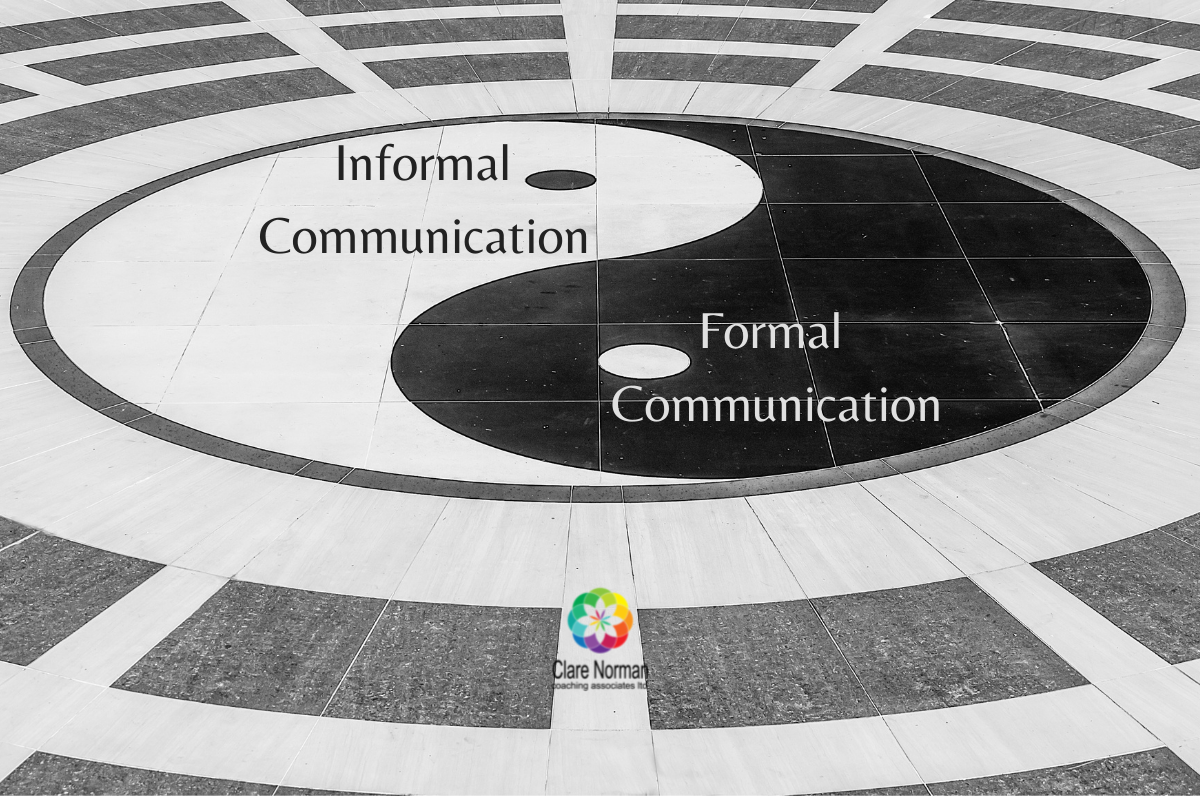
Informal and formal communication gets a little more tricky when we live and work in a virtual world. But it’s by no means insurmountable.
When we book meetings into a person’s calendar, it feels more formal. We wouldn’t book a five-minute quick question into the diary, so meetings tend to be longer and tend to have an agenda (or at least, I hope they do, so that you are using the time wisely!).
We miss the conversations in the corridor as we are moving from one meeting to the next, debriefing on what just happened or preparing for what is about to happen.
We miss the conversations at the coffee machine, with people we hadn’t necessarily intended to talk to, but the serendipity of meeting often leads to a spark of an idea or simply building the relationship.
We miss the brief conversations in the bathroom for the same reason.
We miss the conversations in a coffee shop or over lunch that tend to go into more personal territory.
We miss leaning over and asking a person what they think about something. Or stopping as we pass their desk to ask a quick question.
Those are the more informal kinds of conversations that grease the wheels of relationships and getting the work done.
We also miss out on the gossip – which quite frankly is not a bad thing. When I started to work virtually over fifteen years ago, this was the thing I missed the least. It wasn’t healthy for relationships and it didn’t help to get the work done.
So how do we replace the healthy informal conversations in our virtual world?
Instant messaging is good for this, and yet bad. It can create interruptions to a person’s thinking and creative time. It leads to multitasking during meetings, which takes our attention away from both. And it can lead to a feeling of speeding everything up, which doesn’t always help our mental wellbeing.
I’ve worked with several people who have put a block on instant messaging at times when they are busy with heads down work and/or when they are in meetings, to get over this. Others have agreed set times with their teams when they can instant message together.
I schedule 30-minute coffee meetings with people in my network. These don’t have a specific focus, just catching up on what’s going on in our worlds. We often do them on the phone rather than using a webcam, to gives our eyes a break and to signal that this is something different from our normal formal communications. I know lots of people go for walk and talk sessions on their respective mobiles. This has the double whammy effect of getting exercise and fresh air which revitalises us to be more productive when we get back to our desks.
It might seem indulgent to have such an informal meeting, but it’s so very important for relationships and for building trust. It might open people up to talk more about what is going on for them at an emotional level or at home that might be affecting their work.
As well as 1-1 conversations, think about how you can create connections between team members, with a 5 or 10-minute engagement at the start of team meetings, like asking them to bring an item that represents a favourite smell or a favourite memory.
Or do a quick scavenger hunt where the team has three minutes to collect something that inspires them, something that connects their inner and outer self, something they created themselves, something that connects them with their inner child, something that fills them with awe and wonder, something that enables them to be rather than do. Then get them to introduce their items and hold them up to the camera.
And/or add in a Listening Circle, which is all about connection and understanding, asking people in rounds:
- What are you thinking about? What is on your mind?
- How are you feeling about that?
- What do you want or need?
- What might you be inclined to ask yourself and/or others for to meet your needs?
I know from experience how powerful these listening circles are to get people to open up with each other and see where they could support each other.
What other ideas do you have for these more informal – personal – conversations?
I think you know how to do the formal conversations, but please do make sure that you have an agenda and stick to it:
- What is the purpose of this meeting?
- What is the outcome you are aiming for?
- How will you know you have got what you need?
- Why is this important?
- How long do you need? (don’t assume every meeting needs to be an hour, and give people at least 5 minutes at the end for a bio break before their next meeting)
- Who should be invited? Who doesn’t need to be taken away from their work?
- How will you create divergent thinking?
- How will you converge on a decision?
- Who will take accountability for actions agreed?
This blog post might give you some added ideas for formal team meetings.
What else can you share from the past year about getting the balance right between informal and external communications?
To access the previous posts in this series, please follow the links below.