
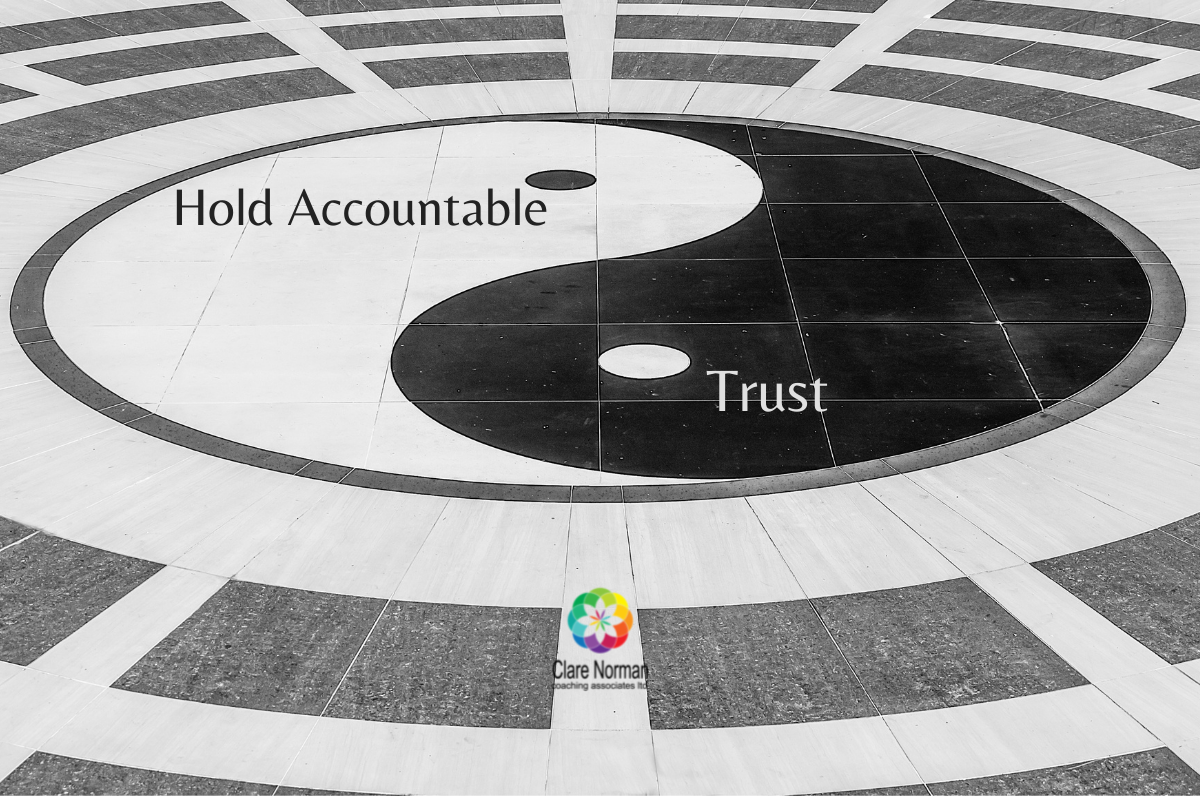
Your role as a leader is to get work done through others. You can’t do it all yourself, as we discovered in the yin and yang of task and relationship.
That means though that you do need to hold them accountable for results. I’ve been coaching one senior legal leader who wanted to figure this out as she wasn’t even sure what her employee was working on most of the time. She needed to set him clearer goals and have him come up with his milestones so that they could measure his progress over time to be sure he would meet the final deadline.
Let’s revisit the questions we can ask each time we meet:
- The last time we met, you said you planned to do X. How is that going? [Congratulate them on any progress, no matter how small]
- What challenges are you facing?
- What are the risks? How are you planning to resolve those?
- How can I help you? [This is not about doing it for them, but freeing up resources]
- What actions will you take next week to move this forward?
- What are you learning?
I wonder why we shy away from these kinds of conversations?
Perhaps we are too busy to meet – that’s a problem in and of itself if we have too much on that we cannot support our team members. This needs to be a priority.
Perhaps we think they might be affronted? But this is not micro-managing. This is supporting and challenging them to do their best and reach beyond what they thought was possible. The intention is one of trust, not mistrust.
So alongside and in between holding them accountable to delivery, we must trust them to get on with the work until and unless they ask for support – and then we inquire vs advocate.
But what if they show they don’t meet their targets? Then what?
I would argue that if we have been meeting with them on a weekly (or at least a fortnightly) basis, you should both be able to nip any obstacles in the bud and find ways around them before the lag gets too big.
So that’s your first check-point. Are we meeting enough to ensure that we can divert resources to this project in the short term if needed?
If your answer is yes and they are still not meeting those weekly progress targets, what is happening? Inquire. Get under the surface. What is getting in the way? What else do they need?
Maybe there is an issue at home that is taking their mind away from work. Is it appropriate to give them the time they need for that rather than ignoring it and hoping it will go away?
Maybe they aren’t the best person for the job? In which case, what would be a better fit for their skills and who can you swap into this project?
Maybe they aren’t motivated by this particular piece of work? Again, what would be a better fit with their passions and purpose and who can you swap into this project?
If you don’t have an alternative to swap them into, maybe they aren’t the right person for your team at all. Is there another role in the company? Or would you be better off parting ways so that they can find something that gives them a buzz and you can find someone who will be jazzed by your opportunity?
These might be hard conversations to have, but that is your role. Getting work done through others.
Don’t jump to conclusions though. Inquire. Get creative about options. But equally don’t put up with a bad fit. Talk to HR about the way forward if you’ve tried everything else.
Once again, all of this can be done virtually. We have the technology to enable us to have conversations about accountability and to keep us in a trusting partnership.
This is one of a number of blogs in the series for Leaders, use the navigation below to read the others.