
Love as Revolutionary Practice Throughout this series, I’ve explored what love looks like in coaching, how it manifests in supervision, the constraints we face in expressing it, and its role in creating psychological safety. I’ve attempted to do this with nuance, acknowledging the complexities and challenges involved. But perhaps I’ve been too gentle. Perhaps it’s
Coaching Culture

How do you build a coaching culture over time?
In the last blog of my “When to Build a Coaching Culture Series”, I discuss how do you build a coaching culture over time? We’ve said that we are starting small in building a coaching culture. One starfish at a time. But over time, as you expand this to more triads of leaders, there will

How will you know that your coaching culture is making a difference?
In the sixth blog of my “When to Build a Coaching Culture Series” I talk about setting goals and establishing the measures of success. It’s hard to measure the value of time, particularly time to think. If you want to spend money in organisations, you (more often than not) need to prove that it’s money

Where to start with building a coaching culture
In the fifth blog of my “When to Build a Coaching Culture Series”, I discuss where to start when building a coaching culture. If you are an individual leader, you can only start with yourself. So, start there when building a coaching culture. Start asking rather than telling now. If you are responsible for developing

Who can build a coaching culture?
In the fourth blog of my “When to Build a Coaching Culture Series”, I discuss who can build a coaching culture. Anyone can start coaching, from any seat. Anyone can create a ripple effect through the people with whom they use a coach approach. Have you heard the story about the starfish? Strolling along the

What does a coaching culture look and feel like?
You’ll know it’s time to build a coaching culture when: Your organisation is going through change (see my previous post) (oh, wait, isn’t that every organisation?!) Decisions are being made at levels that are paid too much for the complexity of those decisions Strategic imperatives that affect the long-term future of the organisation are not

Want performance to get better?
In the second blog of my “When to Build a Coaching Culture Series”, I discuss how organisations face and instigate change at an increasing rate. That’s never going to change if they want to survive and thrive. But despite knowing that change is here to stay, employees still feel a sense of resistance. Every time
Need to Push Decision-making Downwards?
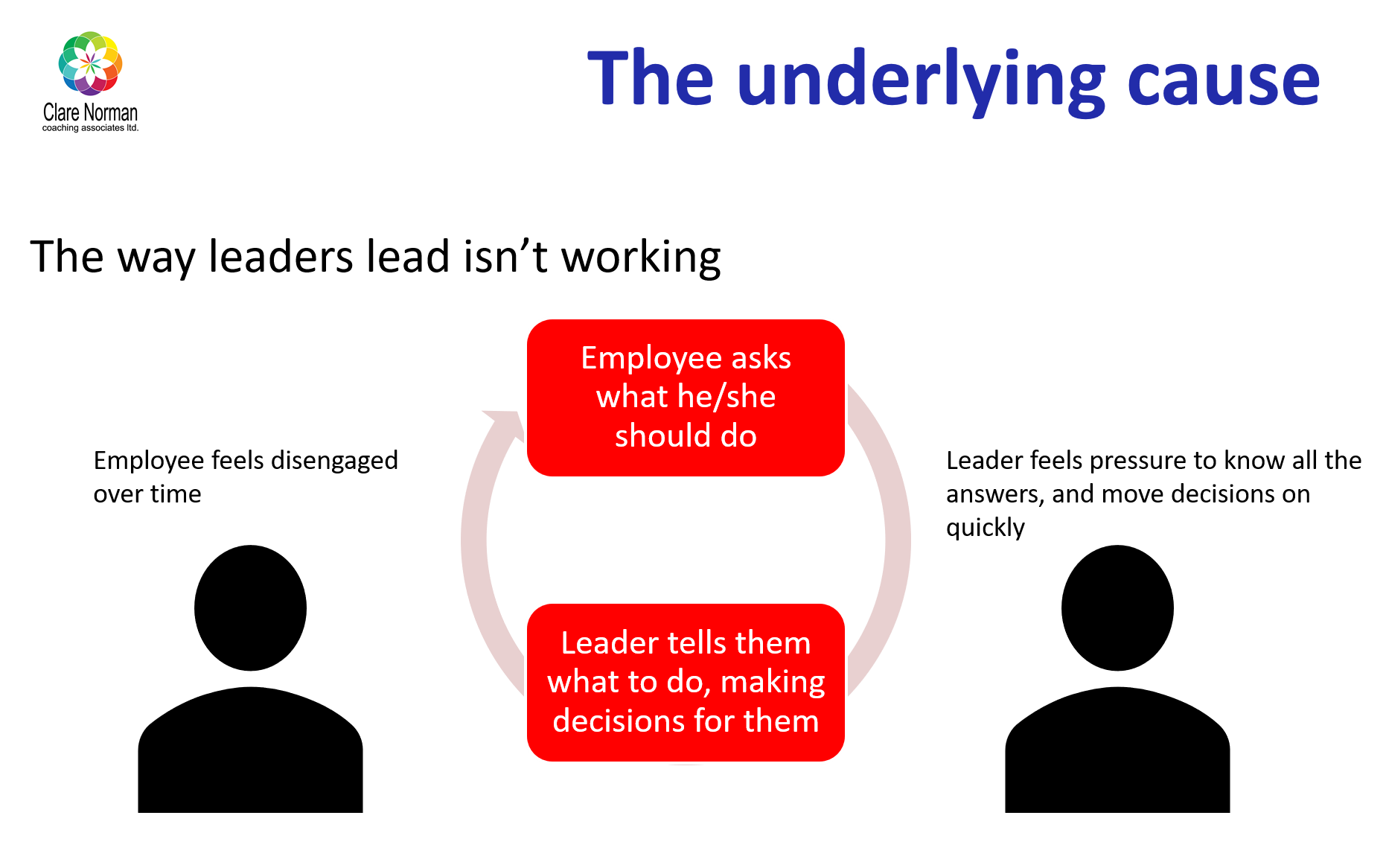
Why Build a Coaching Culture? Ask yourself these questions… Do you ever notice yourself feeling overwhelmed by the amount of work you need to get done, with not enough time to get it done? Do you ever notice how you go straight in to problem solving mode when a team member asks you a question?

When to Use a Coach Approach ~ Summary: Leader as Coach
In this series for the Leader as Coach, we’ve looked at multiple conversation points where coaching – or at least a coach approach – will engage your employees more than telling them. In brief, whenever you have any of these conversations, structure them by: contracting at the start for what you each want to take

Using a Coach Approach Before and After Training ~ Leader as Coach
Training alone reaps a 20% change in behaviour. Training plus coach leads to an 80% change in behaviour. So, we’ll get a much better return on investment from the training that our people attend if we add that extra element before and after. What does that look like? It’s simple: Before the training, ask them:

Coaching Upwards ~ Leader as Coach: When to use a Coach Approach
Using a coach approach can help us to manage our boss as well as our employees, Coaching Upwards. Each time I have had a new boss, I have sat down with them in the first couple of weeks to talk to them about my needs of them. I usually start the conversation by saying something

Leaving an Organisation ~ Leader as Coach: When to use a Coach Approach
You might think that once a person has handed in their notice and leaving, that’s it. You can’t afford to waste your precious time on them, when you need to look forward to finding their replacement and getting them trained up. But wait. This person might be a great asset to you and your organisation,

Coaching for Change in Role ~ Leader as Coach: When to use a Coach Approach
Often in organisations, the scope and scale of a person’s role can change. That may be part of a reorganisation so not necessarily welcome, or, more welcome, to give the employee extra capacity to learn and grow. As this person’s leader, we may need to teach them first, before we can use more of a

Re-joining the Workforce ~ Leader as Coach: When to use a Coach Approach
Maternity and paternity returners benefit hugely from coaching. They’ve been through a massive change, and that will affect their return to work. Those who have taken a sabbatical, study leave or long-term sick leave might also benefit from support as they are re-joining the workforce. Coaching for endings for those re-joining the workforce In the

Coaching Someone who is Moving Roles Internally ~ Leader as Coach: When to use a Coach Approach
One of your team members has found a great new role inside the organisation. Moving roles internally is a time to celebrate with them – not to feel sorry for yourself because you now need to find a replacement and train them up. Too many leaders hold onto their team members for fear of the

Coaching for Promotion ~ Leader as Coach: When to use a Coach Approach
Your team member has proven themselves to be a strong performer; so much so that they have earned a promotion. That means things will change. Not just their status and their pay-grade, but the expectations (yours, theirs and other stakeholders’). So coaching is important to support them through the change, to figure out all of