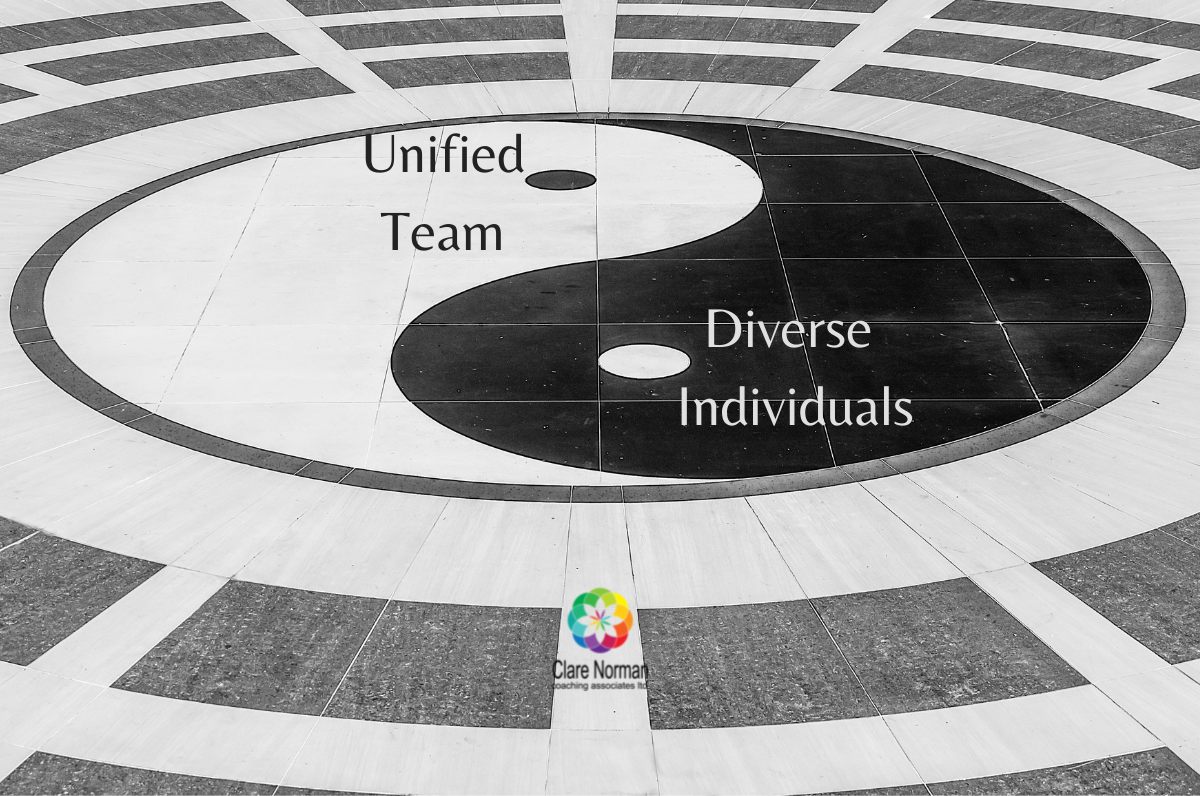
This yin and yang of leadership calls on you to get better at choosing diverse people for your team when you recruit. There are so many variables to diversity that bring so many unique experiences to decision-making. The more diverse your customer base (or should I say your desired customer base), the more diverse your team should be to represent your customers’ thoughts, feelings, beliefs, values and choices.
Age, gender, ethnicity, religion, disability, sexual orientation, education, and national origin. I hope you already take these into consideration as you attempt to get a fuller set of values and experiences into your team. Your team may not be big enough to represent all of them, but strive for as much diversity as your numbers allow. One person might represent multiple diverse backgrounds.
But also think more broadly than this. What life experiences do your team members bring that might be representative of your customer base? A white, middle-class, middle-aged, well-educated heterosexual female would be hard-pressed to understand the needs of a much younger white, less educated lesbian if that is one of your target audiences. Even if she has been through that life-stage herself, younger generations have different values and needs from when we were that age.
It’s true that we can do ethnographic research to get a greater understanding of our customers’ needs, but sometimes our basic assumptions of life get in the way of truly understanding those needs.
So aim for diversity of thought, diversity of background, diversity of experience, diversity of story.
With that much diversity on a team, we might be inviting conflict.
Conflict in teams is healthy, not harmful, if we can use it to create better solutions. I’ve been catching up on (ok, yes, binge-watching) House recently and his team is always in conflict at what they call the differentials, the conversations about what might be the cause of the patients’ symptoms. As a result of this conflict, they get better results (eventually) and solve the tricky cases.
So your job as the leader is to harness the conflict such that it stays healthy. Allow for disagreements but keep them respectful. Focus on the problem, not the person.
“Creative conflict is recognizable for its spirit of curiosity and mutual respect and its commitment to learning and finding the best solution or direction to take. When conflict is creative, interactions are characterized by questions and by a lot of listening to try to get to know and understand the other points of view, without necessarily having to agree with those views. Personal stakes, ego needs, and preferred positions are temporarily suspended so that people can listen deeply to try and hear the legitimate truths or core essence of other perspectives and incorporate these into a larger reframing of the needs being addressed. [Jagoda Perich-Anderson]
If you want to read more about managing conflict, take a look at this job aid.
So what is it that creates a unified team, who can use their diversity to good effect?
A single mission. A single purpose. A single direction.
Everyone pulling in the same direction.
Think of a shoal of fish or a murmuration of birds.
Your role is to be the leading fish or bird, that sets the direction and that keeps the team swimming or flying together rather than in separate directions.
After all, that is the definition of a team (rather than a group of individuals):
“A team is a small number of people with complementary skills who are committed to a common purpose, set of performance goals, and approach for which they hold themselves mutually accountable.” Katzenbach and Smith
Peter Hawkins writes about: “the joy of spending time in … teams where:
- we knew exactly what was required of us
- we had a passion about our collective purpose, which we knew we could only achieve if we were all working at our best and working together
- we looked forward to meeting up and there was a keen interest in each other’s successes, set-backs and learning
- there was a real sense of partnership not just between the team members but with the board [business owner] and stakeholders
- work was an adventure and a classroom, every setback an opportunity for new learning and every challenge a spur for creativity.”
That might sound rare, but that is a truly unified team made up of diverse individuals, and something remarkable to work towards.