Staying Sharp
Practical skills, techniques and insights that enhance coaching competence.
As you develop your coaching, through mentor coaching or otherwise, think of the PCC markers as ingredients in your store cupboard.
Use a spoonful of this, a sprinkling of the other and a pinch of seasoning to make a unique recipe that makes the most of your strengths and the thinker’s energy.
You’ll never use the same ingredients in the same quantity for any other coaching client, even when they come with the same presenting issue.
The recipe that you mix up together will never be concocted ever again.
Inspiration from Mary Akimoto
Staying Safe
Ethics, boundaries, professional standards, risk management.
You may know that I live in the New Forest in the UK, and we had a dreadful wildfire in August that killed many small creatures that are only found in this area of the UK. They were not safe from this climate change that we are encountering.
How safe do you and your clients feel, as the world heats up? This might be something to bring to supervision, because how you feel about life and the world cannot help but leak into your coaching in some shape or form. I no longer believe that it’s possible to put on a totally professional cloak and block out the human side of what we do. We coach from our own biography, as Robin Shohet says.
I watched the National Emergency Briefing earlier this month, and it brought it all home…and it gave me ideas for what I can do to feel that I am part of the solution, not part of the problem. I highly recommend it as part of your own work to stay ethically safe to do this work alongside other human beings.
You can sign the petition calling for a prime-time Covid-style briefing across all channels on national TV (in the UK at least), and until then, you can host a screening in your community so that you can figure out a collective way forward.
You might wonder how this can make a difference to your coaching. But as I said, who we are and how we feel is how we coach. So we must work on our own angst in order to support others in theirs.
Staying Sane
Self-care, sustainability, emotional resilience, perspective
How are you taking care of yourself more generally?
“If you’re running on empty, it’s hard to be loving. As David Whyte reminds us, ‘Rested, we are ready for the world but not held hostage by it; rested we care again for the right things and the right people in the right way.’ (2015)
Notice what kind of tired you are – physical, intellectual, emotional or spiritual. Each requires different forms of care, for example:
❊ Physical self-care: Rest when you need it. Take active rest, like walking or tai chi; and soothing rest like a long bath or simply sitting still. Exercise for strength and stamina. Book health checks to address niggles that stop you being at your best and make nutritional swaps, particularly for brain function. Drink more water.
❊ Intellectual self-care: Engage in reading that nourishes rather than depletes. Give your thinking mind a break through a creative activity. Be silent in between the constant input. Give yourself cognitive stretches.
❊ Emotional self-care: Choose where you want to belong, who your people are, where you can feel seen. Go on artist’s dates with your inner child. Notice small delights. Manage your boundaries and find your ‘no’ as a human right. Give yourself time out to grieve any losses in your life, whether that’s people, animals or things.
❊ Spiritual self-care: Practise loving kindness meditation and stillness without stimulation. Write or read poetry as heart medicine. Practise Hridaya yoga. Spend time in nature. Try Ho’oponopono, a ritual for releasing resentment and returning to love: ‘Thank you, I’m sorry, please forgive me, I love you.’
These are just some examples that enable you to put on your own oxygen mask so that you can help others to do the same. There is nothing indulgent or luxurious about this love for self. Indeed, I know of one coach who tells the people she works with that she charges the big bucks exactly so that she can take care of herself to have the energy to care for them.
How well resourced are you physically, intellectually, emotionally and spiritually?”
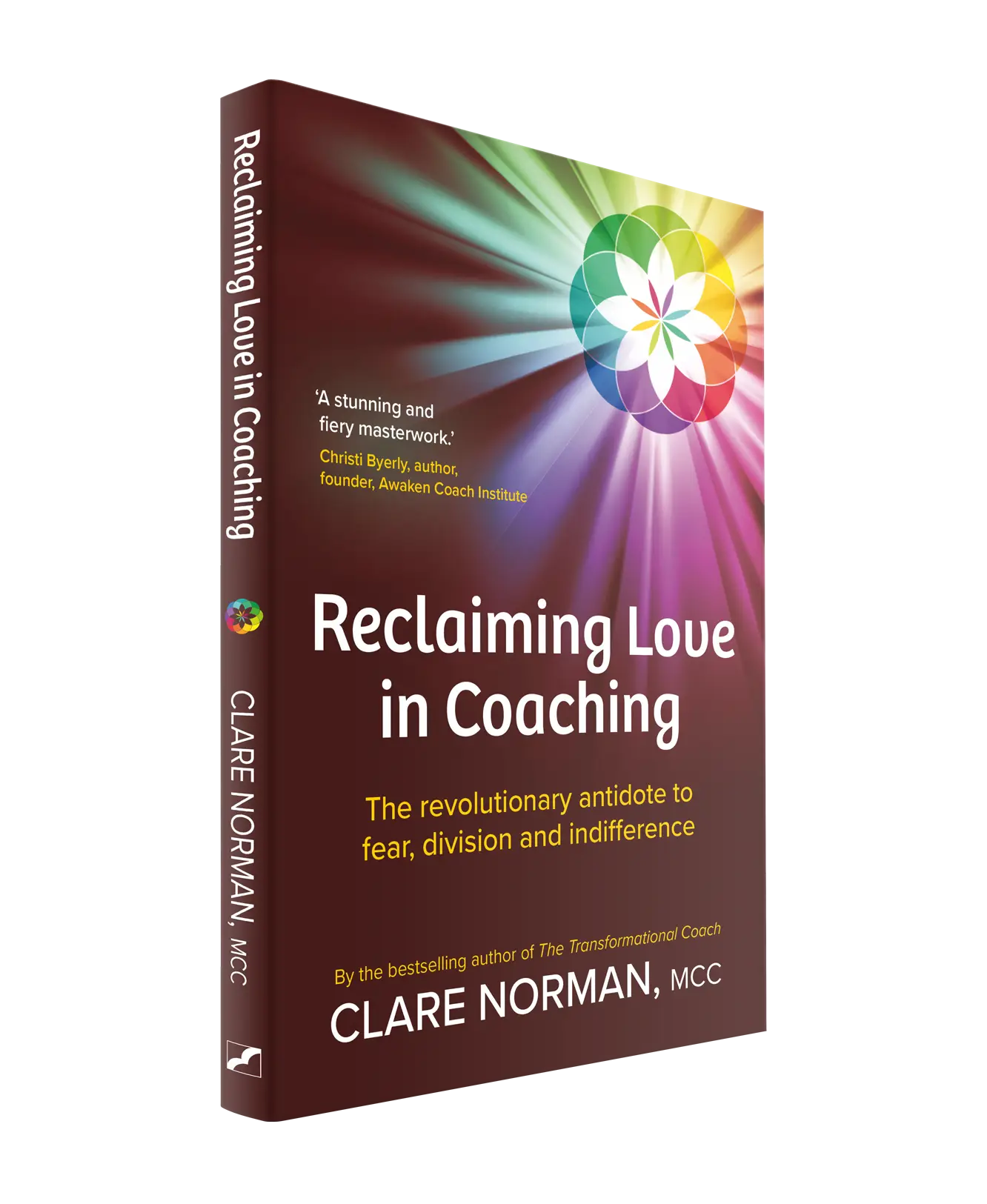
An extract from Reclaiming Love in Coaching.
That is it for this month. I hope there is something here that sparks a reflection, a conversation with a peer, or a small experiment in your next session.
If you would like this delivered directly to your inbox each month, along with a few personal updates and upcoming events, you can sign up for the newsletter via Mailchimp using the link below. It is the same content, with a little extra warmth around the edges, and you will not have to rely on the LinkedIn algorithm to find it.
Until next time,
Clare