Staying Sharp
Practical skills, techniques and insights that enhance coaching competence.
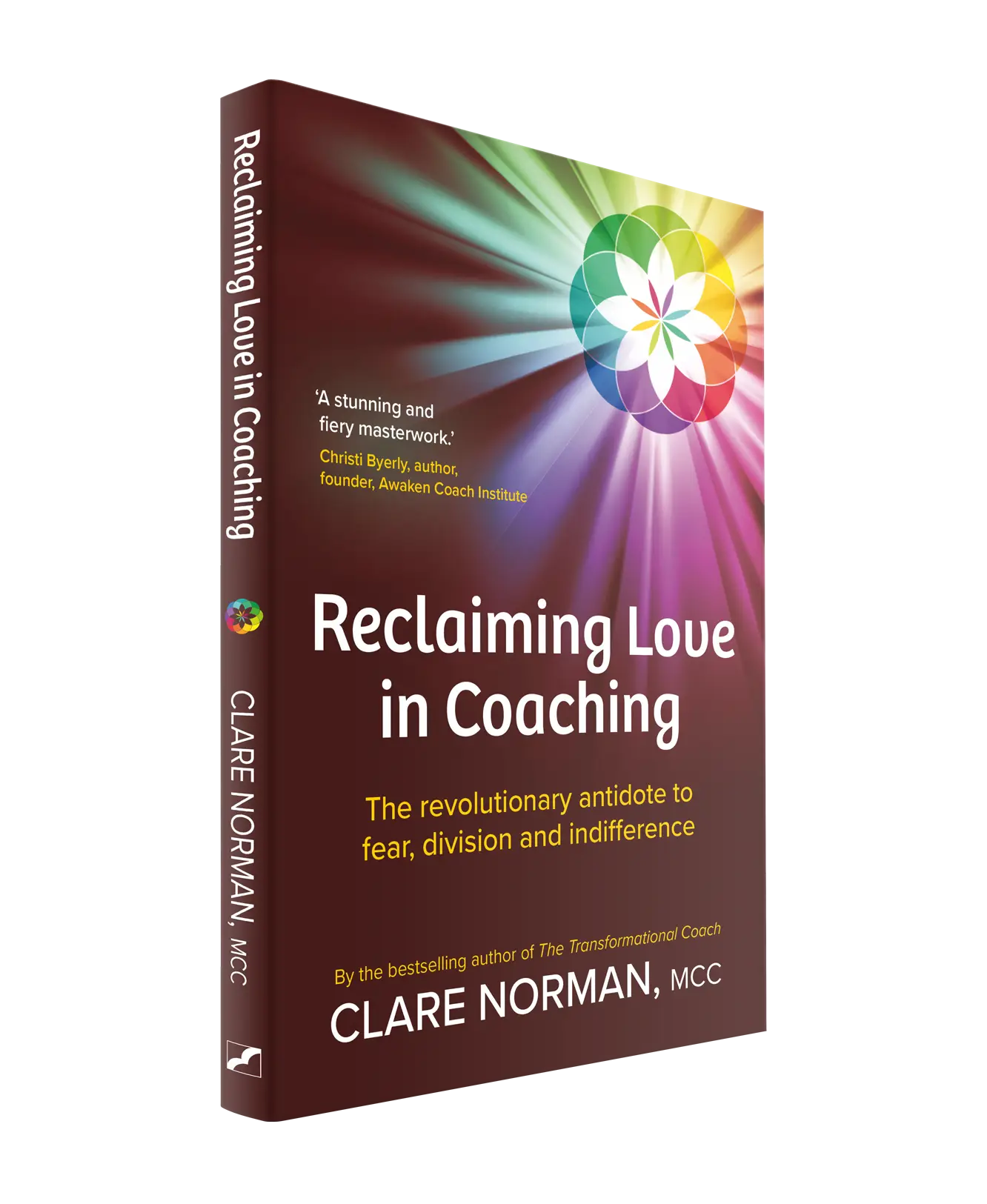
The Transformational Coach was four years old this month. I’m so proud of this book, which is:

- a dip-in and dip-out kind of book,
- a read-it-once, then come back to it kind of book,
- a have it by your side as you build your coaching muscles kind of book
- an unlearning more than a learning kind of book
- a mindset-shifting kind of book
And it’s still being bought as a result of word of mouth. That thrills me more than I can say, as it has sold almost 5,000 copies. Thank you if you are one of the 5,000.
If you don’t already have your copy, maybe pay attention to these wise words from Kim Morgan MCC because the mindset shifts contained within the book will sharpen your coaching edge, I guarantee you.
“Keep this book at your side at all times! It’s everything a great coach should be.”
Staying Safe
Ethics, boundaries, professional standards, risk management.
When I write about loving the people we coach, I mean Agape: holding their best and highest good as our sole intent.
A steady commitment to their flourishing, whatever that turns out to require of us.
It encompasses yet surpasses unconditional positive regard and believing them to be creative, resourceful and whole.
There are other forms of love that are not applicable in coaching; indeed, they could be unsafe in coaching:
Eros: romantic or passionate love, desire, attraction. Unethical in coaching.
Philia: affectionate love between friends or equals. Loyalty, warmth, shared goodwill. The bond of companionship.
Storge: familial love, the natural affection between parents and children, or kin.
Two more appear in some lists:
Ludus: playful or flirtatious love, the early giddy stage.
Pragma: settled, enduring love that has matured over time, the love of long partnership.
If those are what you think of when I write about love, please know that my precise meaning is agape.
That absolutely belongs in the coaching room as counterpoint to fear, division and indifference.
Staying Sane
Self-care, sustainability, emotional resilience, perspective
For those of you who are aligned with the ICF, you’ll know (I hope) that you can use up to ten hours of supervision towards your credential renewal every three years. Although ICF doesn’t require supervision, it is moving more in that direction, as it’s such a crucial part of our ability to stay safe and stay sane in the work that we do.
You may have seen recently that all supervision for ICF renewals must now be with a supervisor who holds the CSS, Coach Supervision Specialisation (as distinct from the MCS for mentor coaching). So if you are already in supervision and wish to use those hours towards your credential renewal in due course, do check in with your supervisor about whether they have or intend to get the CSS.
If I’m honest, all it is telling you is that they are trained as a supervisor. And you may already know that, having checked out their credentials when you started your work with them. But from now on, if you want to use the hours for ICF renewal, be sure to be working with someone who has the CSS.
Beyond the badge, I’d say that what differentiates my supervision (both 1-1 and groups) is that it is love-led, as you might expect.
That is it for this month. I hope there is something here that sparks a reflection, a conversation with a peer, or a small experiment in your next session.
If you would like this delivered directly to your inbox each month, along with a few personal updates and upcoming events, you can sign up for the newsletter via Mailchimp using the link below. It is the same content, with a little extra warmth around the edges, and you will not have to rely on the LinkedIn algorithm to find it.
Until next time,
Clare