
“Engaged employees plan to stay for what they give; the Disengaged stay for what they get.” [Source: Blessing White Employee Engagement Report 2011]
HR’s role is to make sure that the right people are in the right place, at the right time. And in those “right” places, employers have wanted to get more from their employees. That hasn’t changed. But looking through an employee experience lens, we could also want more for our employees.
We want them to feel that they:
- Can use their skills to the fullest
- Have a sense of meaning
- Are on a path to growth
- Have ownership and autonomy
- Are cared about
If employees experience these intrinsic motivators, then we are more likely to get more from them in terms of their productivity, because they will be more engaged. “Organizations with higher engagement levels have lower employee turnover, higher productivity and better results”. [Source: Hewitt Associates. Why Managers are crucial to increasing engagement].
Employees don’t care about HR processes that appear to meet the business’ needs first and foremost. They care about their own growth through the organisation, and the transitions that will support that growth.
So we should move away from treating HR and senior stakeholders as the experts in people’s careers, to seeing our employees as the best judges of what they need to be successful. What could be more engaging for our people than knowing that we cared about their needs and desires, and weren’t making assumptions any longer? That each individual could create and work towards an individualized development plan, based on their own aspirations?
Talent Management processes such as succession planning often discuss a person’s performance and potential without asking the employee what their aspirations are; and then the leader wonders why the individual doesn’t want that opportunity we’re offering them (that doesn’t fit their needs).
If we want to get the right people in the right place at the right time, it’s time to start having more conversations with our people about their desires.
I’ve discovered in the last 15 years that conversations that use a coach-approach enable the individual to become an independent, critical thinker – both about the decisions they need to make on a day-to-day basis to get the job done, but also about their longer term career direction.
Asking questions gets them to think about those needs and desires more clearly, and to articulate them in a way that others can help them to spot opportunities.
Sometimes, it’s appropriate to have those conversations with an unbiased observer, an external coach. Other times, an internal coach may be best placed to help us to navigate the field. Last, but certainly not least, managers can use a coach-approach to help their people to think for themselves about their future, and the changes they are making.
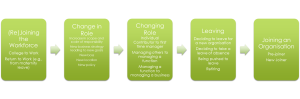
This new series will look at the transitions that employees go through, to get themselves into the right place at the right time; and how each of these thinking partners may play a part at each stage.




Great article Clare! I agree with you.