This is the second extract from my upcoming book, Mentor Coaching: A Practical Guide. If this piques your interest, you can pre-order here
If you are not a coach, I hope you might still take this journey with us as you might still learn something about leadership in roundabout ways.
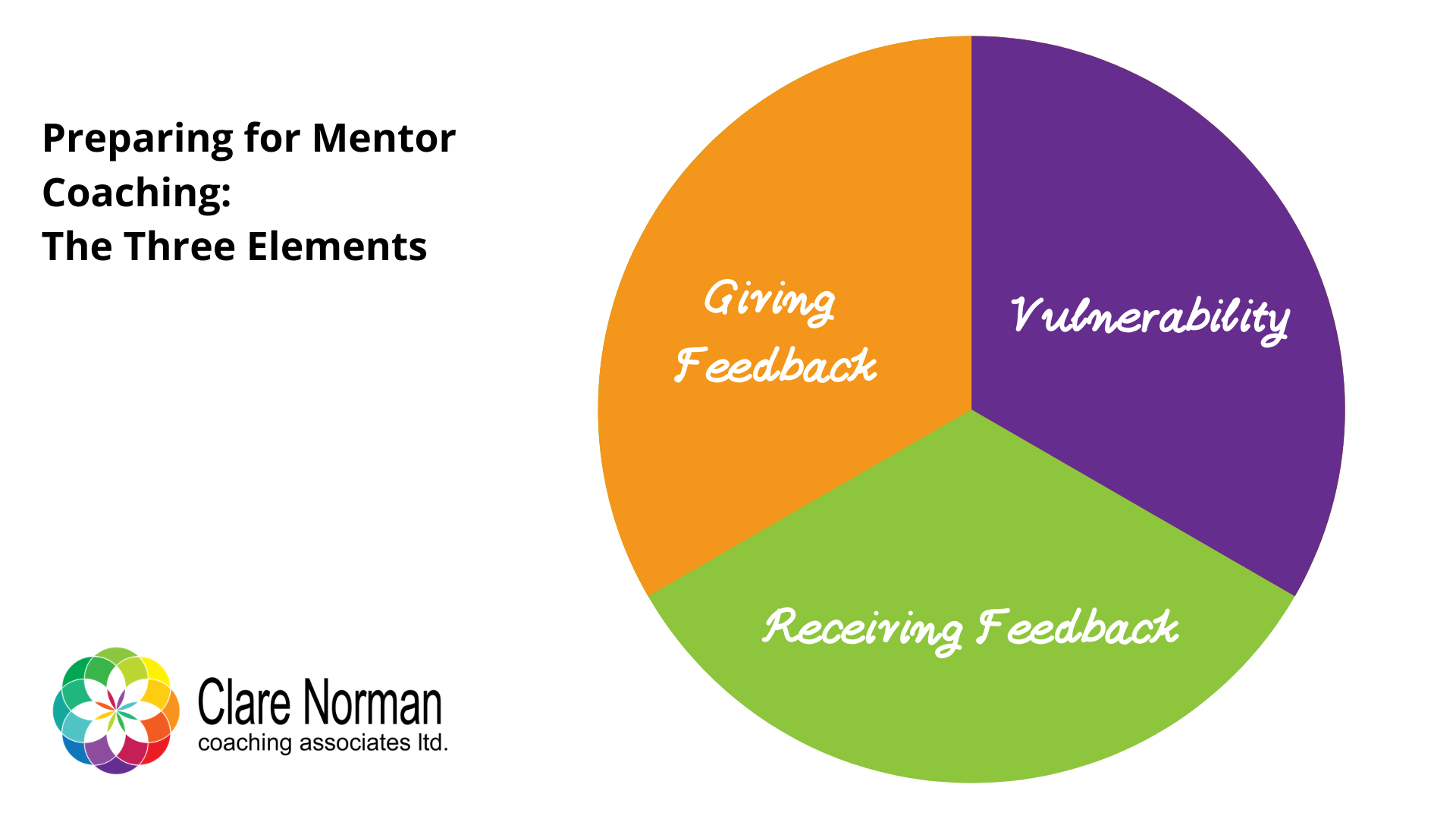
There are three elements that you need to pay attention to as you prepare for mentor coaching:
- Your own self-awareness, particularly where you feel courageous and where you feel vulnerable.
- Your receptiveness to receiving feedback and your decision to act on the feedback.
- Your willingness to give feedback to others if you are learning in a group.
[If you prefer to listen to an audio version of this and the other 3 extracts from the book, you can listen here: https://www.spreaker.com/show/extracts-mentor-coaching-a-practical-gui]
Vulnerability
- Ask your mentor coach and/or your group for what you need to create psychological safety (Edmondson, 1999).
- Step into the arena (Brown, 2015) and coach, setting aside your worries as much as you can, to be fully present.
Receiving Feedback
- Be prepared to give yourself honest feedback first.
- Then listen with a growth mindset (Dweck, 2017) to the feedback from your mentor coach and/or your group.
- Listen to your strengths as well as your stretches.
- Express your thanks for the feedback; don’t be defensive, blame, or make excuses.
Giving Feedback
- Be fully present as you observe other coaches coaching, so that you can:
- be usefully specific to them in your feedback.
- see what else you could incorporate into/delete from your own practice.
- Be supportive and challenging in equal measure.
- Say what you saw or heard – with evidence – and what competency it represented.
In the book, I go into detail on each of these, so if you want to get the nitty-gritty about how to make the most of your mentor coaching, please do pre-order it now.