How long have you been offering mentor coaching?
I have been a mentor coach for aspiring and renewing ACCs and aspiring PCCs since 2014. I started mentor coaching aspiring MCCs in 2023.
Since 2007, I have also invested in almost 40 hours of mentor coaching for myself, because I believe that Mentor Coaching is for Life, not just Credentialing.
I have three mentor coaching associates, who have been offering mentor coaching for three years.
What are the parameters of mentor coaching within which you work?
We follow the ICF’s definition of mentor coaching, so that those who receive mentor coaching from us can ethically claim it as part of their ICF credentialing process. The ICF defines it as observed coaching with feedback using a benchmark set of competencies. This means that your mentor coach observes you coaching, whether live or on a recording, and we discuss how you demonstrate the competencies, both your strengths and your stretches. We will also discuss what mindsets you might wish to discard, if you are to embrace mindsets that underpin new ways of being and doing coaching.
What differentiates you from other mentor coaches?
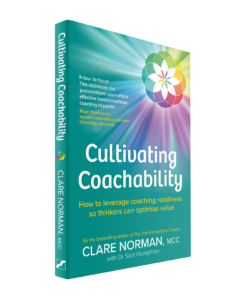
I wrote the first English language book on mentor coaching, published in 2020, which outlines what mentor coaching is, how to make the most of it and how to be a mentor coach.
I subscribe to the ICF Education Digest (for ICF educators) and the ICF Assessors Digest to keep up-to-date with all the latest ICF requirements for each level of credential.
I am a coach supervisor as well, so I can also offer supervision side-by-side, where ethical or resourcing issues arise for you. Supervision keeps you safe and sane; mentor coaching keeps you sharp.
I take a developmental approach to mentor coaching rather than an assessment approach. There is always more to unlearn, no matter how many hours of coaching we have under our belt.
How many people have you worked with in a mentor coaching capacity and what is their success rate?
To date, I have worked with approximately 300 coaches, reviewing over 850 hours of their coaching. Each and every one of them have passed their performance assessments (the recordings sent to the ICF assessors) the first time.
Do you mentor coach people for ACC, PCC and MCC?
Yes in groups, and my team works with the aspiring or renewing ACCs and PCCs in their 1-1s, whilst I focus my time on the aspiring MCCs.
When should I start my mentor coaching for MCC?
I personally wish that I had asked my mentor coaches to use the MCC standards when I had around 1000 hours of coaching under my belt. I actually started at around 2000 hours. The reason I wish I had started sooner was that I was operating at a good PCC standard, but was not stretching my mastery muscles. Had I started earlier, I would have got MCC in my bones much sooner, for the benefit of the thinkers with whom I work. It’s not something we can (un)learn overnight. So if you have an aspiration to become an MCC, I recommend you start your mentor coaching at or soon after 1000 hours (if you read this in time!).
How many hours of mentor coaching do I need for MCC?
Even though you are required by the ICF to invest in 10 hours of mentor coaching, you may need more than this, and it pays to spread it out, so that you can learn from the feedback and integrate it into your coaching before bringing a new recording to mentor coaching. It also requires a commitment to change – how committed are you to intentional mastery?
If you are only doing it for the badge, and want to crack through the mentor coaching as though it were a tick-box exercise, you are likely to slip back to old habits once you are credentialed. This is not ethical to claim to be an MCC, if you don’t continue to coach in an MCC way most of the time. So I ask again, how committed are you to intentional mastery?
What are the key reasons that MCCs don’t pass the first time?
Hours of coaching do not a master make, if every hour is the same as the last. So do not kid yourself that you are already operating at MCC level if you have not done the work to review your coaching using the MCC standards. Most courses, until recently, were designed to enable you to become PCC and that is likely where you are still operating – if you have not taken on any bad habits in the meantime.
In particular, pay attention to the following:
- Are you meeting them where they are, right from the first minute and all the way through the coaching?
- Are you coaching in a way that builds the Thinker’s thinking and sensing muscles rather than your own?
- Are you truly in partnership with the Thinker, enabling them to define the direction at every turn?
- Are you so present and listening with all parts of you, such that you are alert to the whole of what is and is not being said, and to your own body’s intuition?
- Are you courageous enough to offer what your intuition offers up?
- Do you lean into the wisdom of emotion and the body?
- Are you ok with not knowing? Being lost? Letting go of the outcome?
- Are you succinct in all that you ask and all that you offer, getting out of their way?
Which transcription service do you recommend?
We use RaeNotes. Partly because the quality of the transcription is better than other services, leaving you with less editing to do; partly because the app makes your preparation time more productive, as you can map your coaching to the rating scales.
What preparation do you expect of me, the coach?
For 1-1 mentor coaching, listen to your recording before we meet and start to think about what you did or said that moved the thinker forward and what you did that kept them stuck. Be willing to reflect on your intentions for your choices in your coaching sessions. PLEASE READ this handout on listening to your recordings to guide your preparation and reflections; you should plan to spend two hours preparing with each 30-minute recording, listening to it twice and preparing per the handout. Make a note of any timestamps that you would like us to fast-forward to.