Have you noticed the differences over the past 18 months in the way people take risks or not? It’s right there in front of us in the decisions that our governments have made in whether they have blocked their borders for example, or at what point they have opened up out of lockdowns. The risks here are so very complex, involving the economy AND health. Taking risks in business is equally complex. There is never one single risk to consider, but multiples.
Less certainty and more ambiguity
I heard my husband on a work call this morning saying, “yes, we could wait until we have certainty before we make a decision, but we may never get complete certainty”. The implication being, the other person was being cautious and he was willing to take more calculated risk. I am not passing judgement that either one of them was right, as I don’t know what the context was. But what I notice from this example is just how complex our business decisions have become as there is very little certainty anymore, much more ambiguity than there ever has been.
Should risks be considered in isolation?
The thing is, we might personally be risk-tolerant or risk-averse, but sometimes the situation calls for the opposite of our preferred way of being. We need to adapt to that in the moment, identifying those times when we can take calculated risks and those times when we might be better waiting for more information. My friend and colleague William Buist writes about risk from his background as Head of Business Risk Management in a bank. He suggests that risks should never be considered in isolation, as independent from other risks, even though that would be the easy thing to do. If we don’t consider them as a whole, in aggregate, we could be understating the risk and making decisions that don’t address the magnitude of that risk. I would suggest that we face these aggregated risks more and more today than we ever have done in the past.
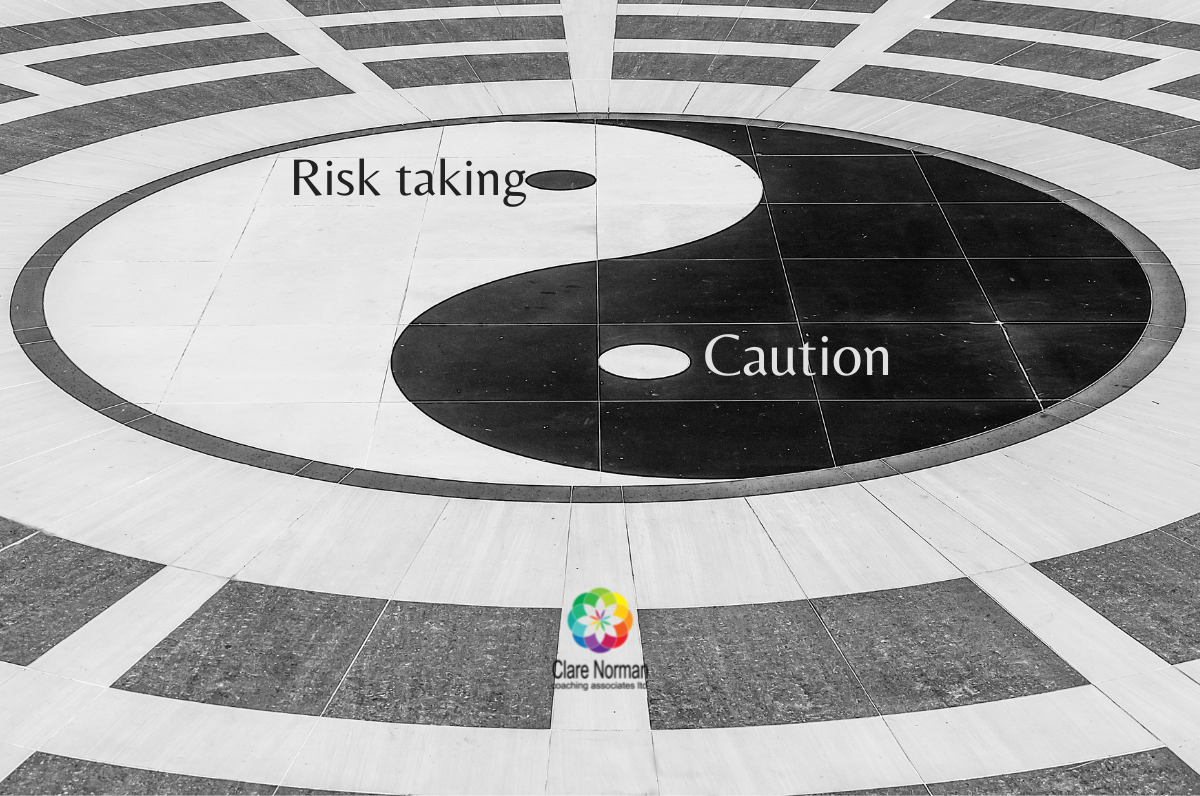
As William says in another post: “Do you act quickly and risk getting the basis of your actions wrong, or act slowly and miss the opportunity to take advantage of others’ caution?” How do you balance this Yin and Yang?
Does it matter whether you are virtual or face-to-face? No. It might be harder to understand all of the constituent risks from afar, but with people on the ground, you can get the information you need to make better decisions.