Welcome to the second edition of this monthly blog, built around the framework from Mentor Coaching: A Practical Guide: mentor coaching keeps us sharp; supervision keeps us safe and sane. Each month I share reflections from my mentor coaching and supervision work, organised around those three themes. If you missed the first edition and want to know more about the shape of this blog, you’ll find it here.
This month’s three reflections are below.
Staying Sharp
Practical skills, techniques and insights that enhance coaching competence.
From doing coaching to being a coach
The shift from doing coaching to being a coach is one of the hardest, most rewarding transitions in our development as practitioners. I write about it a lot, and I coach coaches through it regularly in mentor coaching. It is the shift from relying on models and frameworks to trusting yourself as the instrument of the work: your presence, your attunement, what you notice and how you offer it.
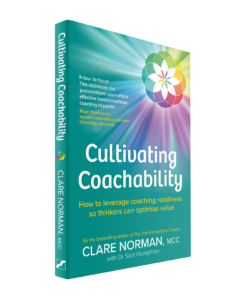
I was reminded of this recently when Brent Roy, MCC, sent me a message about The Transformational Coach. He told me the book had been by his side throughout his two-year journey to MCC, and that it had helped him shift his thinking towards learning how to “be” with his thinkers. He said that eight PCCs had formed a community in late 2023, all aiming for MCC, and had used the book as one of their shared resources.
All eight are now MCC coaches. A-MA-ZING.
Brent and his colleagues were doing the hard work of development together: reading, reflecting, practising, and giving each other feedback. The book was part of that, but the real engine was their commitment to showing up, individually and collectively, and doing the messy, non-linear work of growing into who they wanted to be as coaches.
That is what staying sharp means to me. It is the ongoing willingness to examine how you show up, to keep asking yourself whether you are coaching from habit or from presence, and to surround yourself with people who will hold you to that standard. Whether that comes through a book, a peer group, supervision, mentor coaching, or all of the above, the question remains the same: are you still developing, or have you settled?
If you are looking for a place to start or to revisit, The Transformational Coach was written with this kind of reflective work in mind.
Staying Safe
Ethics, boundaries, professional standards, risk management.
A friendly tip: coaching a coach is not the same as supervising one
If you are coaching another coach for your hours of experience or for your performance assessment, please be careful not to stray into supervision territory unless you are a trained supervisor.
The distinction matters. Supervision is to support the coach with aspects of their client work, including ethical dilemmas. Coaching is to support the coach with their life, working patterns and/or business.
If you are a coach who needs support with your client relationships, please find a supervisor rather than a peer coach. This is for your own safety and the safety of your clients. The two spaces serve different purposes, and when they get muddled, the person most at risk is the thinker at the end of the chain.
Staying Sane
Self-care, sustainability, emotional resilience, perspective.
“It’s lonely being a coach”
I hear this often, yet I don’t feel that loneliness. Maybe because I’m an introvert and like my own company? But more likely it’s because I have surrounded myself with people I can riff with, learn from, develop my thinking with, laugh with, cry with, be messy with, get support from, and be challenged by.
I have:
- A supervisor for my coaching and another for my supervision.
- A coach.
- A therapist.
- A mentor coach.
- A business manager.
- Coaching frolleagues.
- Associates in my business.
- Work and non-work best friends.
- Personal development retreats and programmes for my inner development.
I don’t leave this to chance. It’s a conscious choice in this digital world to make sure I have people to talk to about what’s on my mind, what’s worrying me, what’s under the surface but hasn’t yet been given time. Surrounded by all these wonderful people, I couldn’t possibly be lonely, as long as I am honest with them about what’s going on for me.
If you recognise that feeling of isolation, it might be worth asking yourself: who have I got around me, and am I actually talking to them about the things that matter? The loneliness often sits where the honesty hasn’t reached yet.
That is it for this month. I hope there is something here that sparks a reflection, a conversation with a peer, or a small experiment in your next session.
If you would like this delivered directly to your inbox each month, along with a few personal updates and upcoming events, you can sign up for the newsletter via Mailchimp using the link below. It is the same content, with a little extra warmth around the edges, and you will not have to rely on the LinkedIn algorithm to find it.
Until next time,
Clare