
Leaders need to get comfortable with direct communication in coaching conversations. No flannel, just directness. I am frequently asked the question, “how can you be non-directive at the same time as providing direct communication? Aren’t those diametrically opposite?” Direct communication is an offer, to which we should be unattached. If it doesn’t land with the
Coaching

Leader as Coach: Powerful Questioning
The most powerful questioning does not require a question at all; but silence. That silence that allows the person to take their thinking where they need to take it, rather than where you think it should go next. That’s it. That’s all there is for today’s post! That’s not true, but I want you to

Leader as Coach: Active Listening
Active listening is as much about silence as anything else. Silence is golden. That includes in your role as leader coach. Silence allows the thinker to think. So, get comfortable with silence. And when the thinker does speak, pay attention. Notice what they are saying, but also how they are saying it, and what their

Leader as Coach: Coaching presence
One of the things people often say as a result of coaching is that it’s the first time they feel they have been really heard, properly heard, fully humanly heard. That’s because of the total coaching presence of the person alongside them. Being 100% with the person, no distractions. How often can you say that

Leader as Coach: Establishing Trust and Intimacy
Establishing Trust and Intimacy with the person you are coaching is paramount if they are to do their best thinking. They need to feel confident that they can be vulnerable and share their truths, their whole truths and nothing but their truths. If they keep certain things to themselves for fear of being judged, they

Leader as Coach: Establishing the Coaching Agreement/ Contracting
In this series about coaching competencies, we move to establishing the coaching agreement, or in one word, contracting. If you add contracting to your conversations, those conversations are much more likely to be transformational, as they will be focused rather than meandering. There are three aspects to contracting: The Big C contracting before the coaching

Leader as Coach: Meeting Ethical Guidelines and Professional Standards
Last week, I set out the International Coach Federation coaching competencies. Now it’s time to delve into each one in turn, starting with Meeting Ethical Guidelines and Professional Standards. You might think this doesn’t apply to leaders as coaches, only professional coaches. But it’s just as important for leaders as coaches, as there are multiple

Coaching competencies for leaders
The case for coaching is clear. Now let’s look at how leaders apply coaching competencies in their work with their team members. Over the next few weeks, I’ll be highlighting the International Coach Federation coaching competencies, and how they translate into the workplace. As a taster, here they are: Setting the Foundation Meeting Ethical Guidelines
Creating independent critical thinkers
I often hear leaders saying that they don’t need to use a coach-approach to leading their people; they just need to tell them what to do and their people will get on with it. They are forgetting the power of independent critical thinkers. Yes you can do that (tell rather than coach), if you want
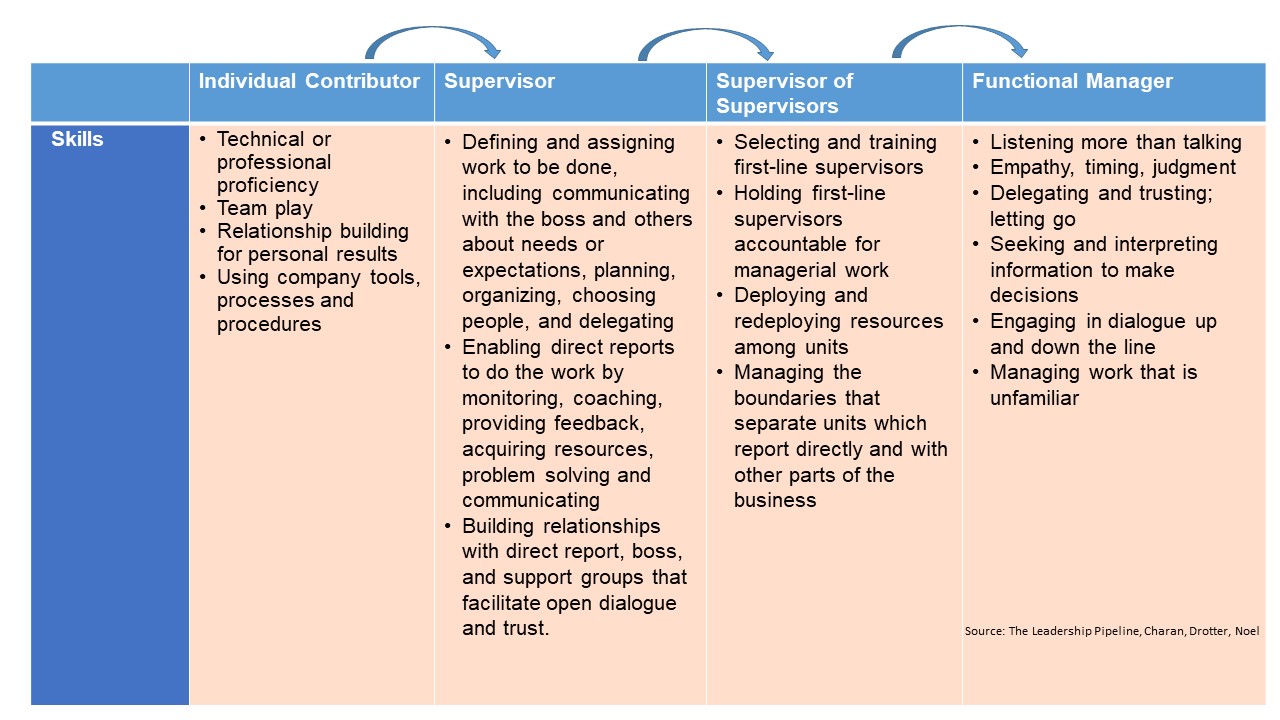
The leader experience and the leadership pipeline
All leaders need coaching and feedback, no matter what their level in the leadership pipeline. They may need other things along their journey too, to ensure that they have the best leader experience from the first time they take on a leadership role to the end of their leadership careers. In the Leadership Pipeline, by Charan,

Leader experience
I look at everything through an “experience” lens. Customer experience, employee experience, coachee experience. I’ve recently turned my thoughts to the leader experience. What makes work a great experience for leaders? They are employees of course, so the employee experience relates just as much to them as it does to anyone else at any
What difference does coaching supervision make?
The Association of Coaching Supervisors is asking this question: what difference does coaching supervision make? If you are a supervisor, please read on. The AoCS writes: We want to gauge what difference coaching supervision is making to the supervisor and people in the supervisor’s network. We would like to reach a range of people too –

Teresa May: from command and control to coach-approach
This week’s news in the UK has been fascinating to me, particularly as it relates to Teresa May’s leadership style and her lack of a coach-approach. I understand why she couldn’t step down from her prime ministerial role, after talking about strong and stable leadership. Stepping down would make a mockery out of that statement (if
Coachability: a belief in your ability to make changes
Coachability – an interesting word! You may be surprised to hear that not everyone is coachable. As Ginnie Baillie says: “Ultimately clients are not buying you or coaching, they are buying their belief in themselves and their goals.” So it’s important to help a potential new client to get clear about whether they believe in

Join the new ICF Coaching Circle Southampton
The ICF Coaching Circle Southampton met for the first time on 15/5/17 to mark International Coaching Week, and we developed the terms of reference below. If this sounds like the kind of learning and networking opportunity that you are looking for, please join the group: on Monday 26th June at 6pm-7.30pm at the Sir John Barleycorn

Supervision: Seeing Beyond the Blindspots
In this International Coaching Week, Michelle Lucas, Danielle Brooks and I would like to provoke a discussion about coaching supervision; in particular why some coaches don’t feel the need for it. We’ve written a 3 minute storybook about Helen. Helen is a good coach. Read her story (simply click on the picture below) to find out what